Catholic Charities. Providing Help. Creating Hope. VISION:
Believing in the presence of God in our midst, we proclaim the sanctity
of human life and the dignity of the person by sharing in the mission
of Jesus given to the Church. To this end, Catholic Charities works with
individuals, families, and communities to help them meet their needs,
address their issues, eliminate oppression, and build a just and
compassionate society.MISSION:
Rooted in the Mission of the Diocese of Youngstown "to minister to the
people in the six counties of northeastern Ohio . . .(and) to the world
community", we are called to provide service to people in need, to
advocate for justice in social structures, and to call the entire Church
and other people of good will to do the same.GOALS:
Catholic Charities is devoted to helping meet basic human needs,
strengthening families, building communities and empowering low-income
people. Working to reduce poverty in half by 2020.KEY VALUE: HospitalityWHAT
WE DO: Organizing Love. "As a community, the Church must practise love.
Love thus needs to be organized if it is to be an ordered service to
the community" (Deus Caritas Est, par. 20)
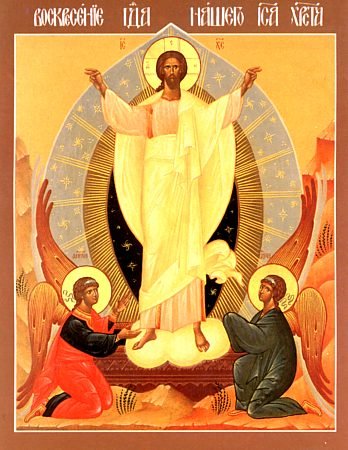
http://www.pc-freak.net/images/Christ_is_Risen_icon.jpg
Homily of His Holiness Pope Benedict XVI - Easter Vigil Holy Saturday, 7 April 2012
Dear
Brothers and Sisters, Easter is the feast of the new creation.
Jesus is risen and dies no more. He has opened the door to a new life,
one that no longer knows illness and death. He has taken mankind up into
God himself. “Flesh and blood cannot inherit the kingdom of God”, as
Saint Paul says in the First Letter to the Corinthians (15:50). On the
subject of Christ’s resurrection and our resurrection, the Church writer
Tertullian in the third century was bold enough to write: “Rest
assured, flesh and blood, through Christ you have gained your place in
heaven and in the Kingdom of God” (CCL II, 994). A new dimension has
opened up for mankind. Creation has become greater and broader. Easter
Day ushers in a new creation, but that is precisely why the Church
starts the liturgy on this day with the old creation, so that we can
learn to understand the new one aright. At the beginning of the Liturgy
of the Word on Easter night, then, comes the account of the creation of
the world. Two things are particularly important here in connection with
this liturgy. On the one hand, creation is presented as a whole that
includes the phenomenon of time.
The
seven days are an image of completeness, unfolding in time. They are
ordered towards the seventh day, the day of the freedom of all creatures
for God and for one another. Creation is therefore directed towards the
coming together of God and his creatures; it exists so as to open up a
space for the response to God’s great glory, an encounter between love
and freedom. On the other hand, what the Church hears on Easter night is
above all the first element of the creation account: “God said, ‘let
there be light!’” (Gen 1:3). The creation account begins symbolically
with the creation of light. The sun and the moon are created only on the
fourth day. The creation account calls them lights, set by God in the
firmament of heaven. In this way he deliberately takes away the divine
character that the great religions had assigned to them. No, they are
not gods. They are shining bodies created by the one God. But they are
preceded by the light through which God’s glory is reflected in the
essence of the created being.
What
is the creation account saying here? Light makes life possible. It
makes encounter possible. It makes communication possible. It makes
knowledge, access to reality and to truth, possible. And insofar as it
makes knowledge possible, it makes freedom and progress possible. Evil
hides. Light, then, is also an expression of the good that both is and
creates brightness. It is daylight, which makes it possible for us to
act. To say that God created light means that God created the world as a
space for knowledge and truth, as a space for encounter and freedom, as
a space for good and for love. Matter is fundamentally good, being
itself is good. And evil does not come from God-made being, rather, it
comes into existence through denial. It is a “no”.
At
Easter, on the morning of the first day of the week, God said once
again: “Let there be light”. The night on the Mount of Olives, the solar
eclipse of Jesus’ passion and death, the night of the grave had all
passed. Now it is the first day once again – creation is beginning anew.
“Let there be light”, says God, “and there was light”: Jesus rises from
the grave. Life is stronger than death. Good is stronger than evil.
Love is stronger than hate. Truth is stronger than lies. The darkness of
the previous days is driven away the moment Jesus rises from the grave
and himself becomes God’s pure light. But this applies not only to him,
not only to the darkness of those days. With the resurrection of Jesus,
light itself is created anew. He draws all of us after him into the new
light of the resurrection and he conquers all darkness. He is God’s new
day, new for all of us. But how is this to come about? How does all
this affect us so that instead of remaining word it becomes a reality
that draws us in? Through the sacrament of baptism and the profession of
faith, the Lord has built a bridge across to us, through which the new
day reaches us. The Lord says to the newly-baptized: Fiat lux – let
there be light. God’s new day – the day of indestructible life, comes
also to us. Christ takes you by the hand. From now on you are held by
him and walk with him into the light, into real life. For this reason
the early Church called baptism photismos – illumination.
Why
was this? The darkness that poses a real threat to mankind, after all,
is the fact that he can see and investigate tangible material things,
but cannot see where the world is going or whence it comes, where our
own life is going, what is good and what is evil. The darkness
enshrouding God and obscuring values is the real threat to our existence
and to the world in general. If God and moral values, the difference
between good and evil, remain in darkness, then all other “lights”, that
put such incredible technical feats within our reach, are not only
progress but also dangers that put us and the world at risk. Today we
can illuminate our cities so brightly that the stars of the sky are no
longer visible. Is this not an image of the problems caused by our
version of enlightenment? With regard to material things, our knowledge
and our technical accomplishments are legion, but what reaches beyond,
the things of God and the question of good, we can no longer identify.
Faith, then, which reveals God’s light to us, is the true enlightenment,
enabling God’s light to break into our world, opening our eyes to the
true light.

Dear
friends, as I conclude, I would like to add one more thought about
light and illumination. On Easter night, the night of the new creation,
the Church presents the mystery of light using a unique and very humble
symbol: the Paschal candle. This is a light that lives from sacrifice.
The candle shines inasmuch as it is burnt up. It gives light, inasmuch
as it gives itself. Thus the Church presents most beautifully the
paschal mystery of Christ, who gives himself and so bestows the great
light. Secondly, we should remember that the light of the candle is a
fire. Fire is the power that shapes the world, the force of
transformation. And fire gives warmth. Here too the mystery of Christ is
made newly visible. Christ, the light, is fire, flame, burning up evil
and so reshaping both the world and ourselves. “Whoever is close to me
is close to the fire,” as Jesus is reported by Origen to have said. And
this fire is both heat and light: not a cold light, but one through
which God’s warmth and goodness reach down to us. The great hymn of the
Exsultet, which the deacon sings at the beginning of the Easter liturgy,
points us quite gently towards a further aspect. It reminds us that
this object, the candle, has its origin in the work of bees. So the
whole of creation plays its part. In the candle, creation becomes a
bearer of light. But in the mind of the Fathers, the candle also in some
sense contains a silent reference to the Church,. The cooperation of
the living community of believers in the Church in some way resembles
the activity of bees. It builds up the community of light. So the candle
serves as a summons to us to become involved in the community of the
Church, whose raison d’être is to let the light of Christ shine upon the
world. Let us pray to the Lord at this time that he may grant us to
experience the joy of his light; let us pray that we ourselves may
become bearers of his light, and that through the Church, Christ’s
radiant face may enter our world (cf. LG 1). Amen. ...
In Catholic Charities http://www.ccdoy.org , we help bring this light to all persons and communities in need and bring Good News to the world. http://ronpogue.typepad.com/.a/6a00e54fb5e54d8834014e8723077b970d-320wiReflection from Church Documents and Official StatementsPontifical Council of Justice and PeaceTOWARDS REFORMING THE INTERNATIONAL FINANCIAL AND MONETARY SYSTEMS IN THE CONTEXT OF GLOBAL PUBLIC AUTHORITY, October 24, 2011The
birth of a new society and the building of new institutions with a
universal vocation and competence are a prerogative and a duty for
everyone, with no distinction. What is at stake is the common good of
humanity and the future itself.In
this context, for every Christian there is a special call of the Spirit
to become committed decisively and generously so that the many dynamics
under way will be channelled towards prospects of fraternity and the
common good. An immense amount of work is to be done towards the
integral development of peoples and of every person. As the Fathers said
at the Second Vatican Council, this is a mission that is both social
and spiritual, which “ to the extent that the former can contribute to
the better ordering of human society, it is of vital concern to the
Kingdom of God.” Some important date(s) this week:http://www.americancatholic.org/Features/Saints/ByDate.aspxSee website for biographies of Saints and Blessed celebrated this week.http://www.canossiansisters.org.au/about/_img/magdalen2.jpgTUESDAY APRIL 10 St. Magdalen of Canossa (1774-1835)
Wealth
and privilege did nothing to prevent today’s saint from following her
calling to serve Christ in the poor. Nor did the protests of her
relatives, concerned that such work was beneath her.
Born
in northern Italy in 1774, Magdalen knew her mind—and spoke it. At age
15 she announced she wished to become a nun. After trying out her
vocation with the cloistered Carmelites, she realized her desire was to
serve the needy without restriction. For years she worked among the poor
and sick in hospitals and in their homes, and also among delinquent and
abandoned girls.
In
her mid-twenties Magdalen began offering lodging to poor girls in her
own home. In time she opened a school, which offered practical training
and religious instruction. As other women joined her in the work, the
new Congregation of the Daughters of Charity emerged. Over time, houses
were opened throughout Italy.
Members
of the new religious congregation focused on the educational and
spiritual needs of women. Magdalen also founded a smaller congregation
for priests and brothers. Both groups continue to this day.
She died in 1835. Pope John Paul II canonized her in 1988.
SHARING HOPE IN HARD ECONOMIC TIMES.
Ask yourself as you deepen your faith during these 50 days of Easter : Who Is My Neighbor? How can I help?
PAPAL INTENTIONS: April 2012
General Intention: Vocations. That many young people may hear the call of Christ and follow him in the priesthood and religious life.
Missionary Intention: Christ, Hope for Africans. That the risen Christ may be a sign of certain hope for the men and women of the African continent.
Corporal Works of Mercy: The seven practices of charity toward our neighbor
- Feed the hungry
- Give drink to the thirsty
- Clothe the naked
- Shelter the homeless
- Visit the sick
- Visit those in prison
- Bury the dead
|
Note: Please consider joining ourFACEBOOK CAUSE http://apps.facebook.com/causes/106889 FACEBOOK GROUP https://www.facebook.com/pages/Catholic-Charities-Diocese-of-Youngstown/138817639487339TWITTER account, CCDOY, http://twitter.com/CCDOYfor current updates and calls to action that we can all use. See our website at www.catholiccharitiesyoungstown.org for links to the our ministries and services. For
more information on Catholic Social Doctrine and its connection to our
ministries, visit my blog at: http://corbinchurchthinking.blogspot.com/
 On Sunday, (Second Sunday of Easter/Divine Mercy Sunday (http://usccb.org/bible/readings/041512.cfm) we
read from the Gospel of John of Jesus’ appearances to the disciples who
buried themselves behind closed doors in fear. Jesus gives them
“peace.” Jesus dispels their fear. He breathed on them the Holy Spirit.
This outpouring of God’s love led the early Church to respond
immediately to the needs of persons in their own communities by sharing
all that they had with each other. Those who encounter the Lord Jesus
are compelled in love to care for each other as brothers and sisters.




 Posts


